


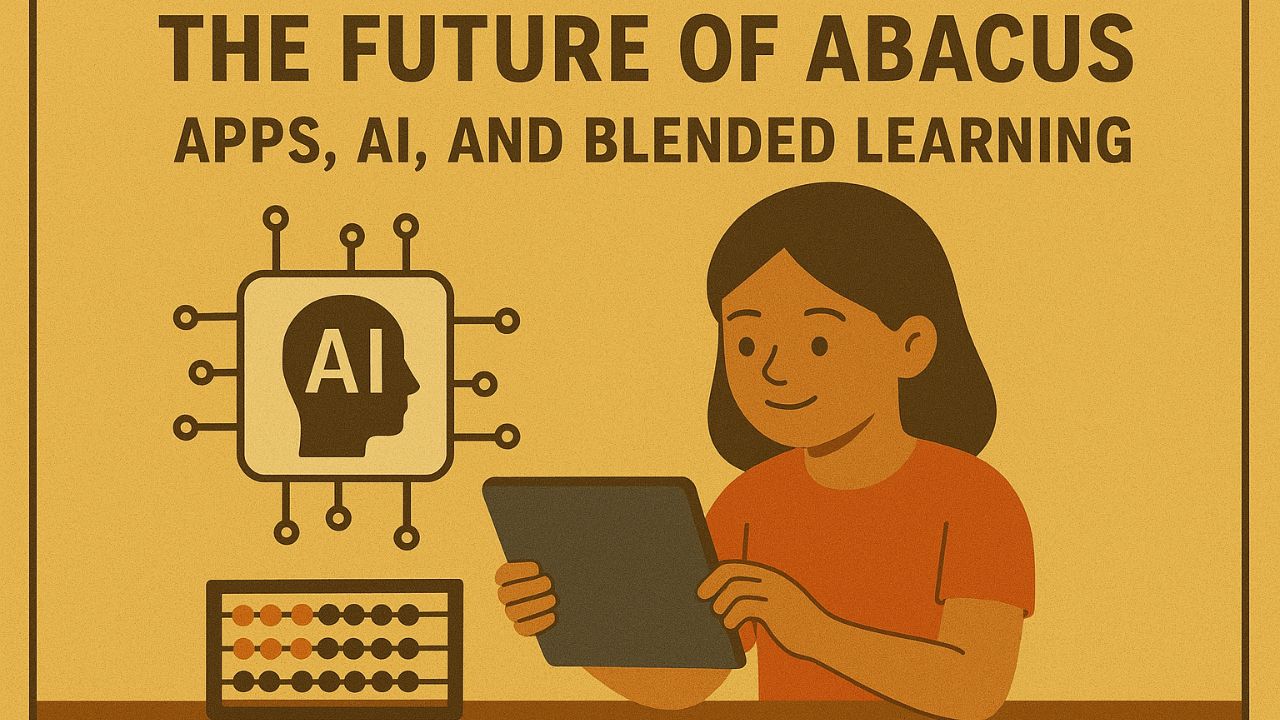
The Future of Abacus: Apps, AI, and Blended Learning
A Scene from Tomorrow’s Living Room
Eight-year-old Aarav adjusts a lightweight headset. On the coffee table sits a classic wooden abacus, but in his ears he hears a cheerful AI coach counting beats. On the screen, animated beads glide across a digital frame, tracking every move. Aarav’s parents watch, amazed that a 500-year-old tool and cutting-edge technology can work side by side.
Welcome to the next chapter of abacus education—where timeless mental math meets apps, artificial intelligence (AI), and blended learning.
1. From Ancient Beads to Digital Screens
The abacus has traveled from Mesopotamian merchants to Japanese classrooms and Indian after-school centers. Traditionally, students move beads physically, then progress to mental abacus visualization.
Today, that tactile frame is being joined by tablets and AI-driven platforms, creating a hybrid learning experience that honors the old while embracing the new.
2. Why Go Digital?
Changing Lifestyles
Busy urban families want flexible learning schedules. Apps provide practice anywhere—whether in the backseat of a car or during a quick evening break.
Data-Driven Feedback
Digital tools instantly track speed, accuracy, and progress, giving parents and teachers actionable insights that a paper logbook cannot match.
Global Access
A child in a small Indian town can now attend a virtual class with a certified Japanese Soroban instructor or join international competitions without leaving home.
3. Apps Leading the Way
Publicly available apps and platforms are reshaping abacus learning:
| App / Platform | Key Features | Parent Appeal |
|---|---|---|
| Soroban Hero (Japan) | Game-like mental math drills, leaderboards | Keeps kids motivated with friendly global competition |
| UCMAS e-Learning | Official franchise app with step-by-step practice | Matches the widely used UCMAS curriculum |
| Aloha Abacus Digital | Guided lessons with instant feedback | Combines tactile abacus visuals with adaptive quizzes |
| Abacuz App | AI-driven error analysis | Sends parents weekly progress summaries |
These apps don’t replace the physical abacus but supplement it with interactive lessons, progress dashboards, and playful rewards.
4. AI as a Personal Math Coach
Adaptive Learning
AI algorithms analyze a child’s speed, accuracy, and hesitation points. If a child consistently struggles with carrying over digits, the system automatically offers targeted drills.
Speech and Gesture Recognition
Some prototypes use the tablet camera to watch finger movements, correcting technique in real time—like a private tutor available 24/7.
Predictive Insights
AI can forecast when a child might plateau and recommend schedule tweaks or additional practice, helping maintain steady improvement.
5. Blended Learning: The Best of Both Worlds
The strongest trend is blended learning, where traditional classes merge with digital practice:
- In-Center Sessions – Children manipulate a real abacus, interact with peers, and receive face-to-face coaching.
- App-Based Reinforcement – At home, they complete AI-driven drills or play mental-math games for short daily bursts.
- Live Online Check-ins – Periodic video lessons keep remote learners connected to expert instructors.
This model combines the tactile, social benefits of the classroom with the convenience and data richness of technology.
6. Evidence from Early Adopters
- Japan: Several Tokyo Soroban schools now run “hybrid” classes where each desk has both a physical abacus and a tablet for tracking time and accuracy.
- India: Franchises like UCMAS and Aloha began offering structured app support during the pandemic and continue to blend online and in-person lessons.
- Global Reach: According to a 2023 EdTech report, downloads of abacus-related learning apps grew by over 35% year-on-year worldwide, signaling strong parent interest.
7. Benefits for Children
- Engagement: Gamified drills sustain attention in digital-native kids.
- Self-Paced Mastery: Children can replay lessons or speed ahead as confidence grows.
- Instant Feedback: Mistakes are flagged immediately, strengthening learning loops.
- Broader Community: Online leaderboards and international competitions build excitement and healthy competition.
8. Challenges and Cautions
Screen-Time Balance
Parents must ensure that digital practice complements—not replaces—hands-on abacus sessions. Experts recommend keeping daily app time within age-appropriate screen-time limits (typically 20–30 minutes for primary schoolers).
Quality Control
Not all apps are created equal. Look for platforms with a proven curriculum, privacy safeguards, and no intrusive advertising.
Teacher Training
Instructors need digital literacy to integrate apps effectively. Schools that invest in teacher tech-training tend to deliver a smoother hybrid experience.
9. Tips for Parents Exploring Digital Abacus Learning
- Try Before You Commit – Many apps offer free trials. Test usability and child interest.
- Check Curriculum Alignment – Ensure the digital program complements your child’s in-person lessons.
- Monitor Progress Together – Review weekly reports with your child; celebrate milestones.
- Maintain the Physical Abacus – Encourage occasional bead-based practice to preserve tactile and motor benefits.
10. What the Future May Hold
AR and VR Experiences
Imagine children practicing mental abacus in a 3D immersive space, where beads float in midair and respond to hand gestures.
AI-Powered Global Tournaments
Real-time international competitions could match players of similar skill levels worldwide, with instant analytics.
Integrated School Curricula
Forward-looking education boards may soon embed app-based abacus modules into regular math classes, blending physical and digital learning from the outset.
Final Thoughts
The abacus may have ancient roots, but its future is unmistakably high-tech. As apps and AI reshape how children learn, the core goal remains the same: to build strong mental math, sharper focus, and lasting confidence.
For families like Aarav’s, the blend of beads and bytes offers the best of both worlds—a way to honor tradition while embracing innovation. Whether through a wooden frame or a holographic interface, the abacus continues to prove that great learning tools never go out of style—they simply evolve.
This article draws on publicly available reports, education technology trends, and parent feedback. Always review individual apps for privacy and suitability before introducing them to children.