


Beyond the Boundary: How India’s Women Cricketers Inspired a Nation
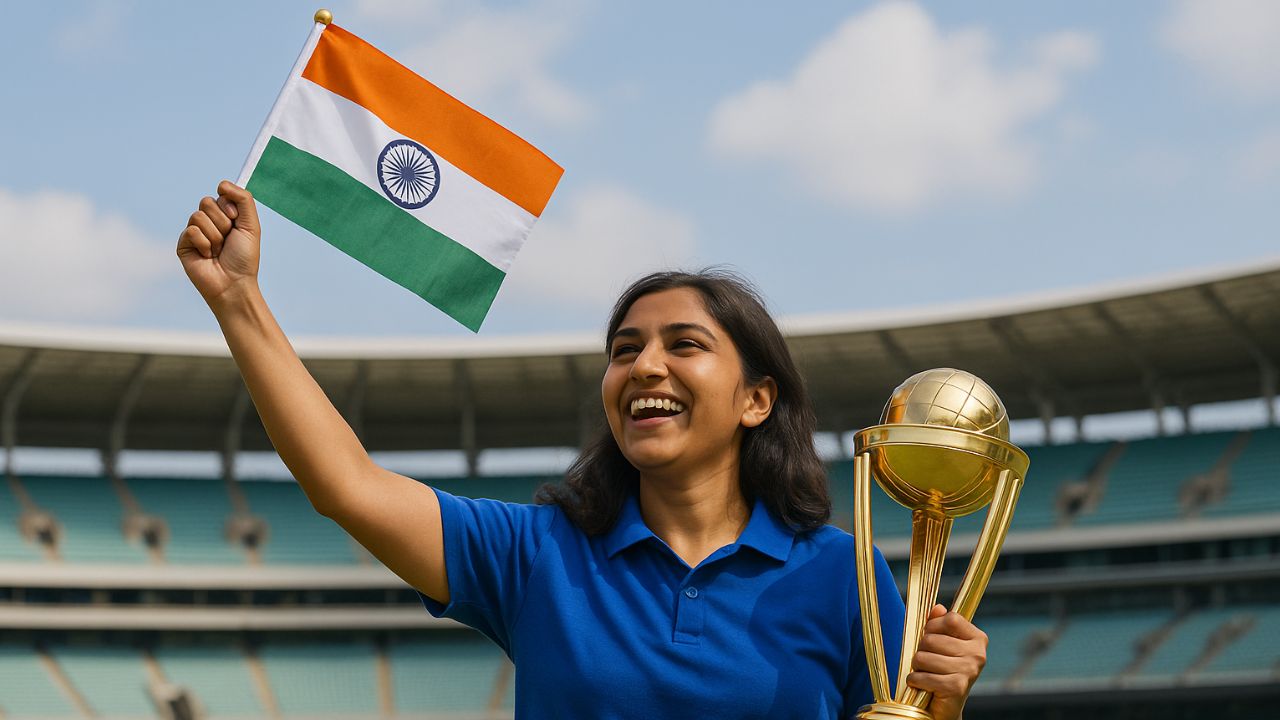
It was not just another night of cricket.
It was a night when the tricolour fluttered higher than ever, when millions of Indians stayed awake not merely for a game, but for a dream that had finally come true. The Indian Women’s Cricket Team, after years of grit, near misses, and quiet determination, lifted the World Cup, etching their names in history and rewriting what ambition means for Indian women.
The moment the final wicket fell, the stadium erupted. The players hugged each other, tears streaming down faces that had long carried the weight of expectations. But beyond the boundary lines, something deeper stirred. Across India — in classrooms, in kitchens, in offices, and in small towns — women looked up and saw something extraordinary: a reflection of themselves in that victory.
More Than a Trophy — A Turning Point for Every Indian Woman
For decades, Indian women have quietly fought their battles — in boardrooms, on fields, and within homes. This World Cup win is not just a sporting achievement; it is a symbol of arrival. It tells every young girl who picks up a bat, or dreams of doing something unconventional, that her time has come.
Cricket has always been India’s heartbeat, but until recently, it beat mostly in a masculine rhythm. The women’s game was often overshadowed, underfunded, and under-televised. Yet, this team — built on resilience and quiet belief — has changed that narrative. Their victory reminds us that talent and perseverance know no gender.
A New Wave of Inspiration
In a government school in Haryana, a ten-year-old girl named Meera now walks to the playground with a cricket bat instead of skipping ropes. Her father, once skeptical about girls playing cricket, now proudly says, “Maybe my daughter can be the next Smriti Mandhana.”
In a small office in Mumbai, working women exchange smiles over tea. They talk not about recipes or reality shows, but about the captain’s last-over composure and the teamwork that brought India glory. The tone is different — filled with pride and belonging.
At home, mothers who once told their daughters to “be careful, cricket is for boys” now switch on the sports channel with curiosity and joy. Grandmothers speak about Harmanpreet Kaur’s innings with the same warmth they reserve for their sons’ successes.
These are small shifts — but together, they form a cultural earthquake.
From Field to Future — Changing Perceptions
For a long time, Indian women athletes had to balance ambition with social expectation. Families worried more about “settling down” than “training harder.” The Women’s World Cup win challenges that deeply rooted mindset. It says — ambition is not a man’s word anymore.
When a group of women in blue conquered the world, they didn’t just win a title; they won the right for millions of Indian girls to dream louder. They showed that courage can wear ponytails, and success can speak in softer voices without being any less strong.
Sports psychologists have long said that visibility changes aspiration. Just as the 1983 Men’s World Cup win created a generation of cricketers, this moment will shape the next generation of Indian women. Young girls will now have heroes who look like them, talk like them, and share their struggles — heroes who once played on dusty pitches, with borrowed bats and boundless hope.
The Ripple Effect Across Professions
The impact of this victory will not remain confined to cricket fields. It will ripple across classrooms, workplaces, and even households.
- Students will find motivation in these cricketers’ discipline and teamwork. The victory teaches that excellence comes from consistency, not convenience.
- Working women will carry this confidence to offices, knowing that success is no longer gender-coded. They’ll speak up more in meetings, ask for promotions without hesitation, and take on leadership roles without apology.
- Homemakers, often unsung heroes of every Indian family, will see their own strength mirrored in this triumph — a reminder that perseverance and patience can build empires, on fields or at home.
- Entrepreneurs and artists too will feel that pulse of inspiration — that belief that India is finally ready to celebrate women not just for their sacrifices but for their achievements.
This is not just a sports victory. It is a movement — a soft revolution born from bat, ball, and belief.
Unity in Emotion, Equality in Celebration
What makes this win even more special is how the country reacted. For once, the cheering didn’t distinguish between “men’s” and “women’s” cricket. Streets filled with chants of “India! India!” without adjectives. Newsrooms covered the victory with the same excitement, and brands rushed to feature these champions as faces of strength.
This equality in celebration is perhaps the biggest victory of all. It signals that India is maturing — that the nation can stand united not only when men bring home trophies, but when women break boundaries.
A Tribute to Quiet Determination
Behind every boundary hit and every wicket taken, there were years of struggle. There were girls practicing on uneven pitches, women who faced mockery for “playing like boys,” and players who juggled part-time jobs to fund their passion.
This World Cup win is their redemption story. It is a salute to coaches in small towns who believed in their students before anyone else did. It’s a nod to families who encouraged their daughters when neighbors doubted them.
It’s proof that dreams nurtured in silence can one day roar on the world stage.
Beyond the Boundary — A New India Emerging
Every great sporting moment shapes a country’s identity. This victory has done more than put a trophy in a cabinet; it has reshaped India’s imagination.
Now, when young women say they want to join the police, the army, or even space research, their parents will remember the girls in blue who brought home the World Cup. They’ll see not rebellion, but possibility.
Sports have a way of humanizing courage. The Indian women’s cricket team’s triumph has made courage accessible — no longer an abstract idea, but something that lives in every woman who dares to step out, speak up, and stand tall.
Conclusion: The Victory That Belongs to All
The Indian women’s World Cup win is not just about cricket — it is about confidence. It belongs as much to the team on the field as to every woman who faced bias, every girl who was told “no,” and every mother who still dreams through her daughter.
In that shining trophy, India doesn’t just see victory — it sees transformation. It sees what happens when opportunity meets determination. It sees the rise of a nation where women are no longer waiting for permission to shine.
And somewhere in every corner of India — from the Himalayan villages to the coasts of Kanyakumari — millions of women smile quietly to themselves, whispering the same thought:
“If they can, so can we.”